
Glen Ellyn » Dental Implants

Dental Implants

Replacing Single Teeth to Multiple Teeth–Bridges and Partial Dentures

Back to top

Some people love to learn by video.  Here is a short video from a lecture I once did on replacing lost teeth with dental implants.  It concentrates on replacing single teeth to a few teeth at a time.  This would cover eliminating dental bridges and dental partial dentures, the options, costs, and rationale.

Click here for video

What are Dental Implants?

Back to top

implantcrown-2-x-ray.jpgDental implants are available in several different forms. The most common dental implants are called “root form implants”. Root form dental implants are similar to teeth in that they mimic the roots of teeth.

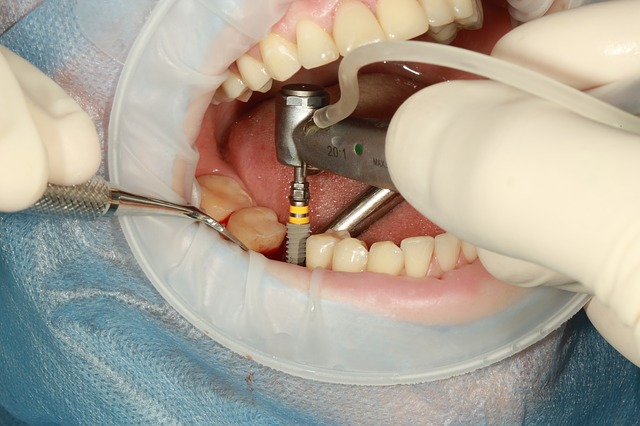
The implants are placed in the bone on the first clinical appointment. The dental implants are allowed to integrate with the bone for usually a period of 3 months . After this healing time the implants are examined to ascertain their “osteo-integration”, or degree of fusion to the bone. The implant then can be prepared to accept the final prosthetic components.
Implants are made of a highly biocompatible material called titanium, which cannot decay and does not need root canal therapy. An advantage of implants is that they stimulate bone growth and thus prevent future bone loss. Bone behaves similar to muscle. When the muscle is stimulated and active, it will grow. If the muscle stops being active, it shrinks. The same events occur with bone, however if bone disappears, it can only be replaced with a bone graft.

In cases where multiple implants need to be placed or in areas where the bone topology is difficult,, advanced technology such as Simplant Planner or Nobel Biocare Nobel-Guide can be used to very accurately place the implants. This software uses CT scans to very accurately visualize the bone in 3-dimensions for accurate implant placement. See our Advanced Technology section for more information!

Be sure to visit our special dental implant site ChicagoImplantDentistry.com for more information on dental implants.  You may special interest in the educational series  Dr. Gibbs was asked to produce on The Hidden Danger of Missing Teeth & Dentures, Replacing Missing Teeth with Dental Implants, and the latest video on So You Hate Your Dentures…How Dental Implants will Change Your Life!

How long Will An Implant Last?

Back to top

Modern dental implants have been maintained in individual cases for more than forty years. An implant, although made of metal, still requires continued care after placement. This includes patient home care and professional maintenance. The life of the dental implant varies with factors of patient health, patient habits (smoking, oral hygiene), and structural overload. Dental implants are of course not subject to dental decay, but the crowns and dental bridges they support may be subjected to wear.  Patients whould also be aware that they need to maintain the health of the gums around the implants.
With proper care dental implants can be expected to last the lifetime of the patient!

What if I’ve lost too much bone already?

Back to top

Luckily, there are many innovative procedures that allow you to grow new bone in your jaw. Bone grafts take bone from one area in your mouth and move it to another. A “sinus lift” can grow more bone to support the top back teeth. Ten years ago we thought this was impossible, but with these new procedures almost anyone can replace their missing teeth with implants.It is important to replace missing teeth as soon as they are lost. This will keep as much healthy bone as possible in the areas where there are no teeth. It’s important not to wait for problems to develop. Untreated, problems will develop.

The innovations in dental implant design; along with improvements in bone grafting materials and surgical techniques has made placing dental implants possible in areas previously not possible.  The patient is often evaluated with advanced technology such as CT dental implant tomography for a very detailed assessment of the bone quality and shape.  This is an exciting area of current dental research!

When do I start losing bone?

Back to top

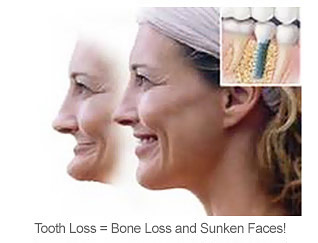
As soon as a tooth is lost, either from gum disease or from a surgical procedure, the supporting bone starts to melt awdentureprofile.jpgay. This bone is part of your jaw. About 40-60% of the bone is lost from the area where a tooth was extracted within the first two years. Even worse, the remaining bone also become less “dense” and subsequently less able to hold implants.

Why is replacing missing teeth so important?

Back to top

Replacement of missing teeth is essential to maintaining the jawbone. That is why a tooth should be replaced very soon after it is lost. Dental implants are man-made replacements for natural teeth. The actual dental implant replaces the root of the missing tooth. It is then used as an anchor to secure the replacement tooth or teeth. Implants allow us to replace missing teeth without harming the healthy natural teeth adjacent to the space. This reduces the future risk of root canals and decay under crowns. Over time, due to lack of use, more of the jawbone disintegrates until it becomes quite difficult to place an implant restoration.
Psychological Significance of Tooth Loss

20% of edentulous (without teeth) patients don’t wear both removable prosthesis all the time.

7% of edentulous patients are not able to wear
their dentures at all

88% of denture wearers have difficulty with
speech

(NIH Oral health of US Adults National Findings Publ. No87 1987

For more information on the health benefits of dental implants, please see Dr. Gibbs’ blog site at http://smileglenellyn.typepad.com/blog/

What Are Mini-implants?

Back to top

The MDI System consists of a miniature titanium implant that acts like the root of your tooth, and a retainer fixture that is incorporated into the base of your denture. Advantages of the mini implants are:mini-implants2.jpg

  • Placed in as little as one visit
  • Low cost: usually about half of traditional implants
  • No long healing period
  • Secures dentures immediately

Mini-implants can take the anxiety out of waiting for permanent full sized implants to “take hold.” If the implants are being placed to stabilize a denture or to replace a long bridge or partial denture, mini-implants can stabilize replacement teeth to function comfortably and predictably in the interim

Implant Replacement or Tooth Supported Bridges?

Back to top

One decision that many patients have to decide on is whether to replace lost teeth with an implant or bridge. A summary of the advantages and disadvantages are as follows:

BRIDGE ADVANTAGESCan be completely in about two weeksLook natural and are strong

Can be less expensive (short term!) than implants

Can be used to additionally realign misplaced teeth

BRIDGE DISADVANTAGESBone loss is not stopped in the areas where the teeth are lost-leading to gaps and food getting caught beneath bridgework over timeDifficult to floss beneath requiring special floss or cleaners

If any of the supporting crowns are compromised or get decay around them, the entire bridge needs to be replaced

Expected longevity only 5 to 15 years

The teeth that will be needed to support the bridge, even if they are in good condition, will need to be drilled away to fit supporting crowns

IMPLANT ADVANTAGESPreserves the bone in the areas where the teeth are lostMuch easier to floss and clean around than bridges

Longevity 15 to 40 years

Are not susceptible to decay

IMPLANT DISADVANTAGESInitial cost is usually more expensive than bridgeworkIf the patient waited too long for the implant to be placed additional procedures may need to done to increase the amount of bone for implant support

In short, most patients find that the implant replacement to more comfortable and easier to care and get less caught around them. The cost of implants is more costly short term, but over a 5 to 20 year period much less expensive and expected longevity is greater. Surrounding teeth are also healthier with implant replacement.

Replacing a Partial Denture with Implants

Back to top

Many patient object to having “something removable” in their mouth. Commonly they complain about the feel of all the tooth clasps, food and order getting beneath the partial denture, and ehe look of the clasps when they smile. Here is how we can substitute dental impalnts for a partial denture!

Smile Essentials - Course of Treatment Smile Essentials - Course of Treatment Smile Essentials - Course of Treatment Smile Essentials - Course of Treatment
1. Before the procedure
Three teeth at the back end of the mouth are missing. The only real replacement alternative is installing a fixed bridge. The bridge contains all teeth in one piece and is anchored on dental implants.
2. Installing the implants
First, the implants are installed. This is normally done in a single session. Sometimes a temporary bridge can be made soon after the implants are placed.
3. Attaching the bridge
The implants need to integrate with the jawbone before the permanent bridge is attached. This is normally done 3-4 months after the implant installation. The time will vary, depending on the bone quality and esthetic concerns.
4. End result
The new bridge will handle all the pressure that your strong, natural back teeth did. You will have a stable and secure solution that allows you to eat what you want.

Alternatives to Fixed Bridge

Smile Essentials - Alternative Treatment Removable partial denture
This alternative is often perceived as uncomfortable and a bit complicated to use. Function can’t be compared to that of a bridge. This denture is made of plastic and metal, which affects its look. Partial dentures are less expensive, but may compromise the health of the teeth where they are clasped.

Implant Retained Dentures (Overdentures)

Back to top

implant-retained.jpg Over many years the bone that used to support and retain dentures erode and the denture can become chronically loose and even fall out randomly. By placing 2 to four implants, we can now “lock-down” the denture. Bone loss is stopped in the area of the implants, but can still continue in the area behind the implants. Most patients say they can now “eat anything” again!

Implant Supported Dentures

Back to top

Implant supported overdentures are the next step in comfort over the implant retained dentures. Additional implants are required for the extra support–usally 4 to 5 in the lower jaw and 5 to 6 in the upper jaw. There are several major advantages:

  • The bone support is maintained in the back area of the mouth
  • The denture is supported entirely by the implant allowing much greater tissue comfort and retention.implant-supported.jpg
  • Biting efficiency is now almost like “normal teeth.”
  • Preserves your appearance and facial structure.
  • Re-newed confidence and quality of life.

Implant Supported Bridges–The Ultimate Replacement!

Back to top

The Ultimate replacement for dentures that has many benefits including:

Thailand Dental Implant Bridge

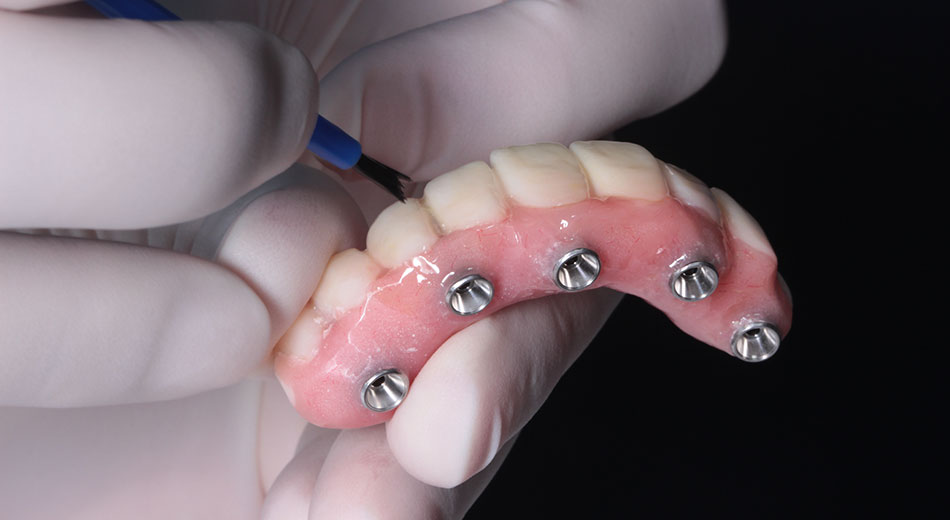
  • A fixed permanent restoration for individuals who has lost all of their teeth.
  • May be an “upgrade from implant retained or support overdentures.
  • Lets you eat and function like having natural teeth.
  • A solid and stable solution relative to dentures.
  • Preserves your facial appearance and prevents bone loss.
  • Immediate function in mandible and maxilla.
  • Gives a nice natural smile with better esthetics relative to dentures.
  • Offers a long-lasting solution, often for life.
  • Renewed confidence and improved quality of life as well.
  • Are not removable–can not fall out!
  • Chewing restored to the level of natural teeth.
  • No plastic on the roof of the mouth allowing natural chewing and taste!
Bangkok Dental Implant, Fixed Bridges on Implants

1:Before the procedure

The dentist determines what needs to be done and prepares both himself and the patient for the coming treatment procedure.

Bangkok Dental Implant, Fixed Bridges on Implants

2. Installing the implants

The first step is installing dental implants to replace the lost tooth roots. The number of implants placed depends on bone condition and the implantologist’s judgement. If conventional implants are done, temporary dentures can be opted to be made or your old dentures may be worn that enable you to eat and function while the implants are left to heal and integrate with the jaw bone.

Bangkok Dental Implant, Fixed Bridges on Implants

3. Attaching the bridge

The final step is the making and securely installing the fixed bridge on top of the implants.

Bangkok Dental Implant, Fixed Bridges on Implants

4. End result

Your new teeth should be hard to tell from natural – both for you and others. People who have had traditional dentures before getting a fixed bridge often describe this as an overwhelming and very positive experience.

For more information and great photographs see the following links:

See our photo gallery for more information on implants and mini-implants. Also, check our patient testimonials for patients feedback. Also check our blog site for more information!

For even more detailed information please either call the office for our FREE special report on “How Your Life Will Change with Dental Implants” or see the Contact page to leave your address or e-mail. Report includes detailed presentation with photos on all implant options, testimonials from happy patients, and a discussion of the benefits that you can achieve!

Implant Supported Bridges

Back to top

The Ultimate replacement for dentures that has many benefits including:implant-full-11upper.jpg

  • May be an “upgrade from implant retained or support overdentures.
  • Lets you eat and function like having natural teeth.
  • A solid and stable solution relative to dentures.
  • Preserves your facial appearance and prevents bone loss.
  • Immediate function in mandible and maxilla.
  • Gives a nice natural smile with better esthetics relative to dentures.
  • Offers a long-lasting solution, often for life.
  • Renewed confidence and improved quality of life as well.
  • Are not removable–can not fall out!
  • Chewing restored to the level of natural teeth.implant-full-11-after.jpg
  • No plastic on the roof of the mouth allowing natural chewing and taste
Bangkok Dental Implant, Fixed Bridges on Implants

1:Before the procedure

The dentist determines what needs to be done and prepares both himself and the patient for the coming treatment procedure.

Bangkok Dental Implant, Fixed Bridges on Implants

2. Installing the implants

The first step is installing dental implants to replace the lost tooth roots. The number of implants placed depends on bone condition and the implantologist’s judgement. If conventional implants are done, temporary dentures can be opted to be made or your old dentures may be worn that enable you to eat and function while the implants are left to heal and integrate with the jaw bone.

Bangkok Dental Implant, Fixed Bridges on Implants

3. Attaching the bridge

The final step is the making and securely installing the fixed bridge on top of the implants.

Bangkok Dental Implant, Fixed Bridges on Implants

4. End result

Your new teeth should be hard to tell from natural – both for you and others. People who have had traditional dentures before getting a fixed bridge often describe this as an overwhelming and very positive experience.

For more information and great photographs see the following links:

See our photo gallery for more information on dental implants and mini-implants. Also, check our patient testimonials for patients feedback. Also check our blog site for more information!

Dr. Gibbs has a new blog site dedicated just to dental implants at chicagoimplantdentistry.com and education videos on YouTube at LiveWithoutDentures

For even more detailed information please either call the office for our FREE special report on “How Your Life Will Change with Dental Implants” or see the Contact page to leave your address or e-mail. Report includes detailed presentation with photos on all implant options, testimonials from happy patients, and a discussion of the benefits that you can achieve!

Dental Implants–Immediate Function

Back to top

Immediate Function of Implants
This is where implants are placed and actually restored within a short period of time (immediate to a few days).  This has tremendous advantages and risks.
The advantages are:
1)   A short treatment time—often just days or weeks instead of the 3-6 month healing/treatment of the more conventional      implant treatment.
2) Often the “gingival architecture or shape of the gums can be better preserved for better esthetics.
3) Avoidance of interim healing restorations such as temporary bridge, or temporary dentures of partials (flippers).Disadvantages are:
4) Fewer visits and time away from work.
5) Immediate esthetics.
6) Immediate (in very cases) chewing ability.  To have this successful the implants must be placed in very stable bone, and ideally joined together for additional support.  Some implant bridges, implant overdentures, or “Teeth in a Day” type dental bridges are examples.
Disadvantages are unfortunately also severe:
1) Success rates are lower in areas where the implant is subjected to biting or chewing forces.
2) An ideal amount of bone is needed for any success.
3)  If a failure does occur, the area usually has to have additional bone grafting, and healing time can be delays for 3-8 months additionally.
4) Patient is encouraged to chew only very soft foods for the first 3-4 months.
5) Failure rates usually do not occur immediately, but in the 3-8 week time period
6) For single crowns, long term success rates generally drop from the 98% range for conventionally placed implants, to the 85-88% success rates (depending on researcher and study parameters).
7) In many cases, only temporary restorations can be placed. and after 3-4 months the final restoration can be placed.
This is definitely an area where ideal conditions need present for predicable results.

Bone Grafting for Dental Implants

Back to top

Overview
Many people wonder about the treatments and procedures done through cosmetic dentistry. Some of the most popular procedures performed today are dental bone implants, dental implants types, and cosmetic dentistry bonding. A popular choice by people who search to restore chewing functions as well as appearance due to periodontal disease or injury are bone grafts. Without adequate amounts of bone, many cosmetic or dental implants procedures would not be possible.

Types of Bone Grafts
Depending on the patient different types of bone grafts are used. Some of the most common materials for bone grafting include:
* Autogenous bone
* Allografts
* Xenografts
* Barrier membranes

Each and every one of those materials are a great however autogenous bone grafts are the best. They are produced from the individual’s own body, helping with the prevention of rejection. Autogenous bone is many times taken from places such as chin, jawbone or the hip. Taken from other individuals or cadavers is the allograft. Another type includes the xenografts. Those are transplants that are utilized from other species such as pigs or cows. For the bone grafting procedures, we will use the individual’s own bone whenever possible.

Some of the most common type of bone grafting procedures include the following:

* Block bone grafting - a block of bone is removed from one area of   the body and screwed into this section or  position where dental implant will be placed. Bone graft must remain in place four two six months before implant is inserted.
* Bone expansion - enable larger dental implants to be placed. Common areas for bone expansion include the front of upper jaws.Living bone expands and stretches, enabling bone expansiontechniques to create larger surface areas for later dental implant insertion.
* Sinus lift graft - dental implant surgeon’s lift the sinus membranes upward to facilitate insertion of donor bone in the floorof the sinus.  This is usually done in the area of the upper back molars when either/both the sinus has expanded own where the lost tooth once was, of the bone has withered  away both in height and width.  There is additionally a vertical sinus graft (typically much less invasive), for smaller grafts,, and a lateral graft for more extensive grafting.
* Socket preservation - each tooth is held in place within a tooth socket. When teeth fall out or are removed, bone in the remaining socket often degenerates. You will generally lose 40 to 60% of the bone that used to surround the roots both in terms of width and height within the first year!  Socket preservation grafting reduces such  bone loss.
* Guided tissue regeneration - gum tissues grow quickly. To prevent gum tissues from growing over bone grafts, a membrane barrier is often used to cover surgical spaces and block gum tissues from growing into those areas. W

Whom are Bone Grafts for?
Anyone who is experiencing bones loss due to infection disease or even trauma will benefit from bone graft. A very popular method to fill the gaps and spaces between the teeth that have fallen out is replacing the missing bone. Bone grafting prevents with more bone loss and helps people enhance speech and chewing.

What is the Cost of Bone Grafts?

Most bone graft procedures in the United States could cost between $2,000 and $2,000, depending on the size and the type of the graft needed. Sometimes the cost of the bone graft is combines with the cost of the dental implants. However, some dental patients travel to places such as Mexico, India, Poland and Costa Rica and they pay between $65-$500. Many times these prices also include the price of the implant.

See our article on The Dangers of Dentures for more information

site map | site by EM Online Media